About the Artist

Mira Takayanagi

Comment Mosaic Artist / Japan

Mira Takayanagi is a Japanese comment mosaic artist whose work transforms social media comments into physical mosaic compositions.

Although he had no formal background in fine art, he began his artistic practice independently, driven by a long-forgotten childhood dream of becoming a painter.

Before turning to art, Takayanagi studied computer science at university and built a career in digital marketing.

While deeply immersed in the digital world, he gradually felt the distance between fast-moving online activity and his desire to create something tangible, lasting, and personal.

Remembering his childhood aspiration to paint, he decided to pursue art as a way to reconnect with that original impulse.

Artistic Origin

At the beginning of his practice, Takayanagi shared various experimental artworks on social media platforms such as TikTok and Instagram, learning through observation and imitation.

The comments he received were mixed—some encouraging, others critical, and at times harsh or dismissive, questioning his talent or right to call himself an artist.


Initially, these comments caused frustration, sadness, and even anger.

He sometimes responded directly, caught in the emotional speed of online interaction.

However, a turning point came when he began to ask a different question:


What if these negative voices could be transformed into art itself?

The idea of physically recycling criticism—turning it into material for his own work—felt unexpectedly liberating.

This moment of excitement and curiosity became the starting point of his current artistic language.

Concept & Philosophy

At the core of Takayanagi’s work are comments left by people online—casual, emotional, anonymous, and fleeting.

These fragments of language are collected, printed, broken down, and reassembled as mosaic elements.

A recurring motif in his work is the cloud.

Clouds have no fixed shape; they continuously change.

When we look at the sky, clouds may resemble animals, faces, or familiar forms, depending on who is observing them.

Takayanagi sees this as a reflection of how we experience reality itself.

The same situation can appear positive or negative depending on one’s perspective.

He believes that choosing to interpret reality in a positive way is not naïve optimism, but a practical force that shapes how life unfolds.

The word cloud also resonates with crowd, symbolizing how many individuals come together to form a shared presence.

Within these cloud-like compositions, faces, animals, and constellation-like forms subtly emerge—not clearly defined, but just recognizable enough to invite interpretation.

Process & Time

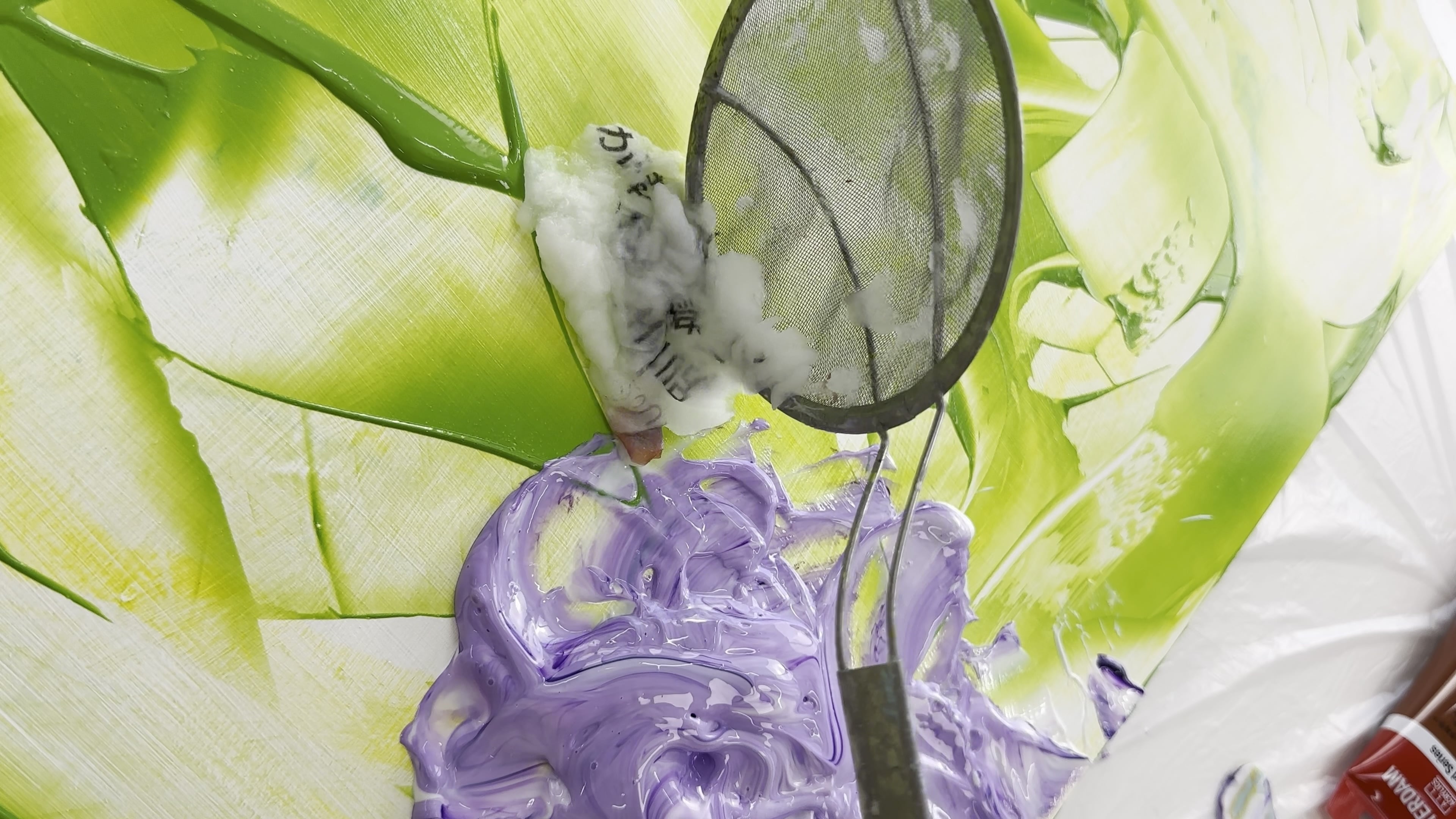
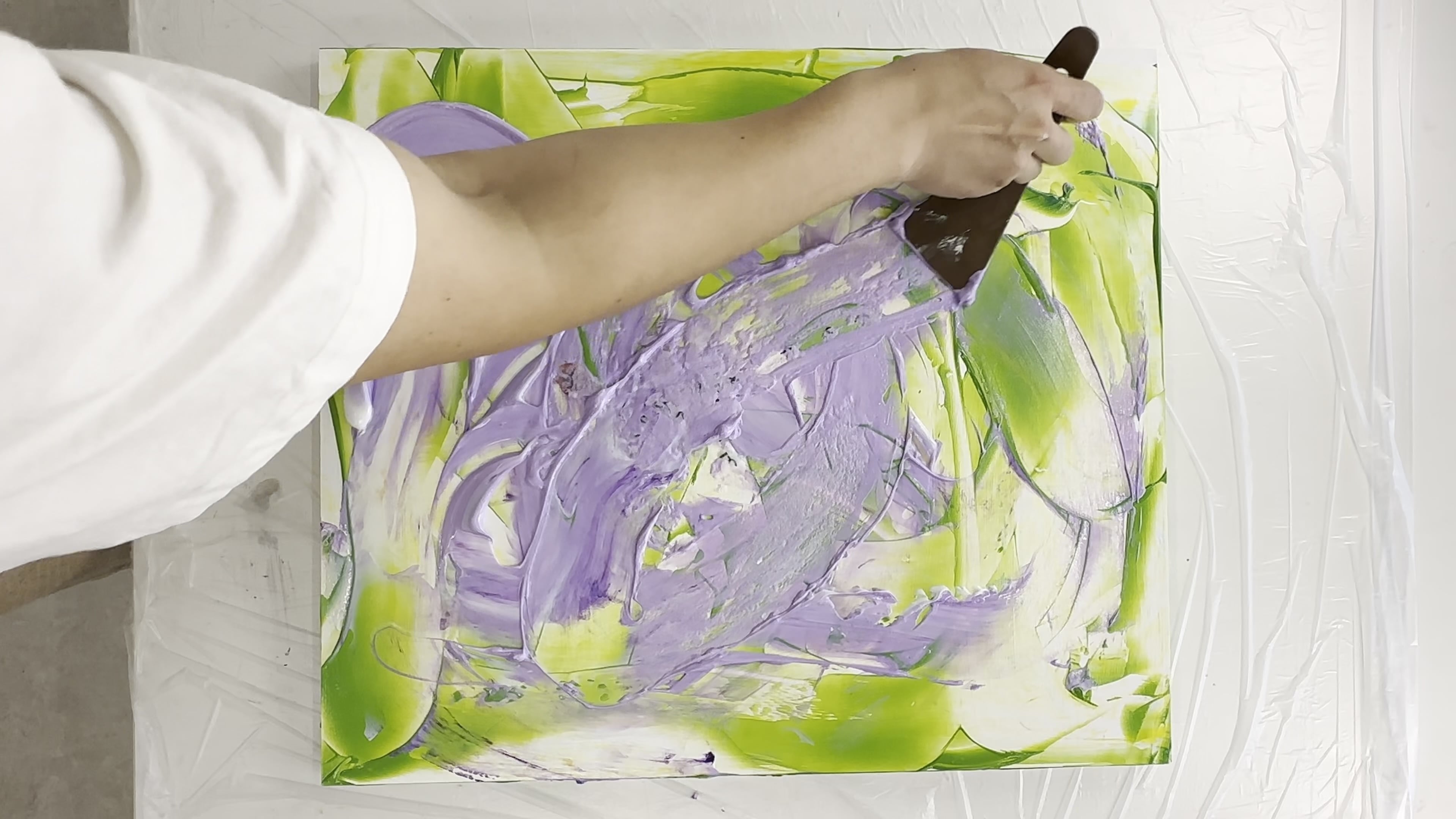
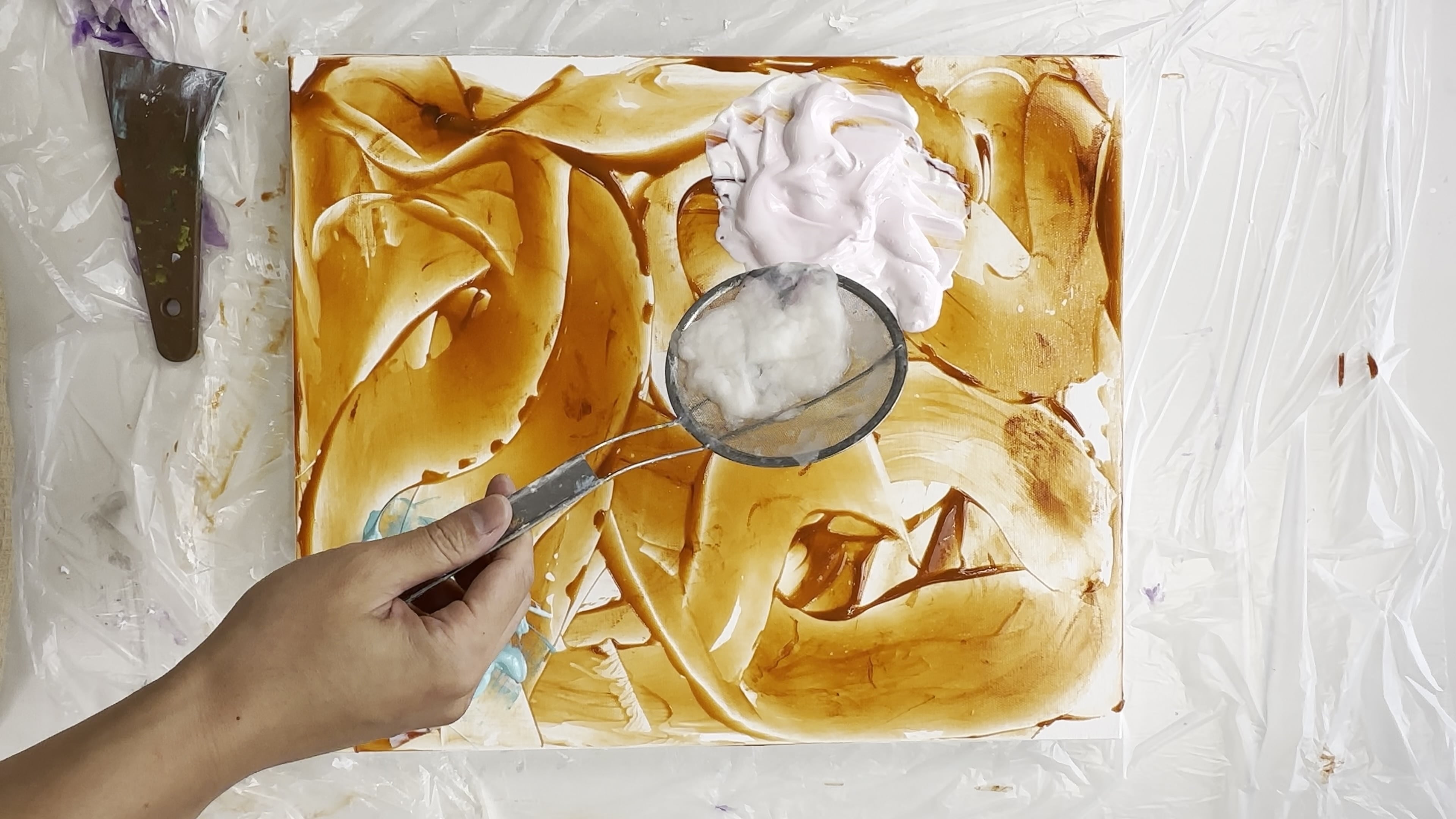
Takayanagi’s works are built through a slow, layered, and irreversible resin process.

What begins as a single comment gradually accumulates into a physical image, recording time, chance, and human presence.

Once a layer is completed, it cannot be undone.

This deliberate irreversibility stands in contrast to the speed and disposability of digital communication.

Each artwork incorporates approximately 300 to 600 individual comments, placed one by one by hand.

Through repetition and time, momentary words are transformed into something fixed, weighted, and enduring.

Every piece is unique and cannot be replicated.

As a child, Takayanagi often spent time in his father’s room—a quiet space filled with books on business, marketing, and philosophy.

Among them were books that explored how mindset and perception influence the course of one’s life.

Although he cannot claim that positive thinking guarantees happiness, he came to understand that those who choose such perspectives often gain something intangible yet powerful.

This belief continues to inform both his life and his artistic practice.

From a distance, Takayanagi’s works appear as a single image.

Up close, countless individual words and fragments reveal themselves.

Through this tension between proximity and distance, he explores the relationship between individual voices and collective presence, visibility and invisibility, memory and form.

Rather than offering fixed answers, his works remain open—allowing viewers to project their own interpretations, memories, and emotions into the image.